

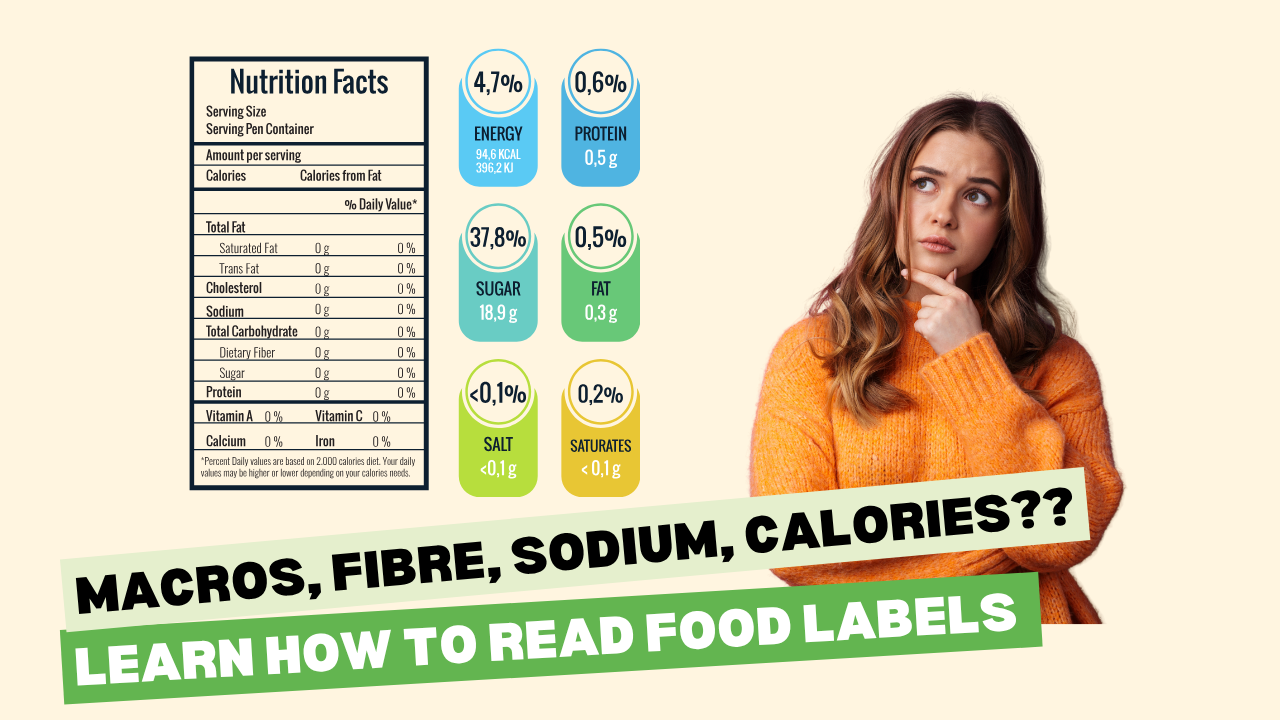
Why Reading Food Labels Matters
In today’s world of endless supermarket choices, food labels are one of the most powerful tools we have to make informed nutrition decisions. Yet, many shoppers admit they find labels confusing or misleading.
Learning to read and interpret food labels empowers you to:
Research shows that individuals who regularly use nutrition labels tend to consume fewer calories, less saturated fat, and more fruits and vegetables.
Step 1: Compare Similar Products
Always compare like with like. For example, compare two brands of yogurt or cereal rather than a yogurt with a muesli bar. This ensures your comparison is nutritionally meaningful.
Tip: Use the “per 100g” column on nutrition panels—it standardises nutrient values across products.
Step 2: Focus on the 100g Column
Serving sizes differ from product to product, so relying on per-serve data can be misleading. The per 100g values are your best tool for accurate comparisons.According to the Australian Government Health Department, comparing products by 100g allows you to quickly see which product contains more or less of a nutrient (e.g., fat, sugar, or sodium) .
Step 3: Read the Ingredients List
Ingredients are listed in order of quantity—from highest to lowest.
To make healthier choices:
Common Hidden Names:
A 2021 review in Nutrients found that ingredient literacy—knowing these alternative names—significantly improves dietary quality and lowers consumption of ultra-processed foods.
Step 4: Prioritise Key Nutrients
Look for products high in:
Limit products high in:
These cut-offs are based on Australian Dietary Guidelines and Heart Foundation recommendations.
Step 5: Understand Portion vs. Serving Size
A serving size is a standard amount determined by the manufacturer (e.g., 30g of cereal), while a portion is the amount you actually eat.
For instance, a chips packet might list one serving as 27g—but most people eat the entire 170g packet. Learning this distinction helps with mindful eating and portion control.Studies show that people often underestimate their portion sizes by 20–40%, leading to unintentional overeating.
Step 6: Watch Out for Misleading Claims
Be cautious of marketing buzzwords:
Step 7: Smart Label Reading for Carbohydrate Counting
If you’re managing diabetes or blood sugar, use labels to count carbohydrates effectively.
Example:
| Wrap Type | Carbs per Wrap | Carb Servings |
| Mission Whole Grain Wrap | ~30g | 2 servings |
| Simon’s Pantry Low Carb Wrap | ~7g | <1 serving |
Key Takeaways
Disclaimer:
The information provided in this blog is sourced from research articles and reputable websites. However, as each individual’s body and health needs are unique, it is essential to consult with your doctor, dietitian, or healthcare provider for personalised advice and plans tailored specifically to your condition.
Acknowledgement:
I would like to extend my heartfelt gratitude to our CEO, Purva Gulyani – Accredited Practising Dietitian, for providing me with the opportunity to contribute to this blog. Your valuable feedback, along with your time spent proofreading and editing, has greatly enhanced the quality of this work. Your guidance and support are truly appreciated.
References

Purva Gulyani – an Accredited Practising Dietitian and lifelong member of the Indian Dietitian Association. Currently pursuing PhD at Latrobe University. Purva brings over 16+ years of clinical dietitian experience to the table.


Commence your transformative journey to wellbeing today, taking the initial stride towards a healthier, happier you. Embrace constructive alterations that lead to a brighter and more vibrant future.
