

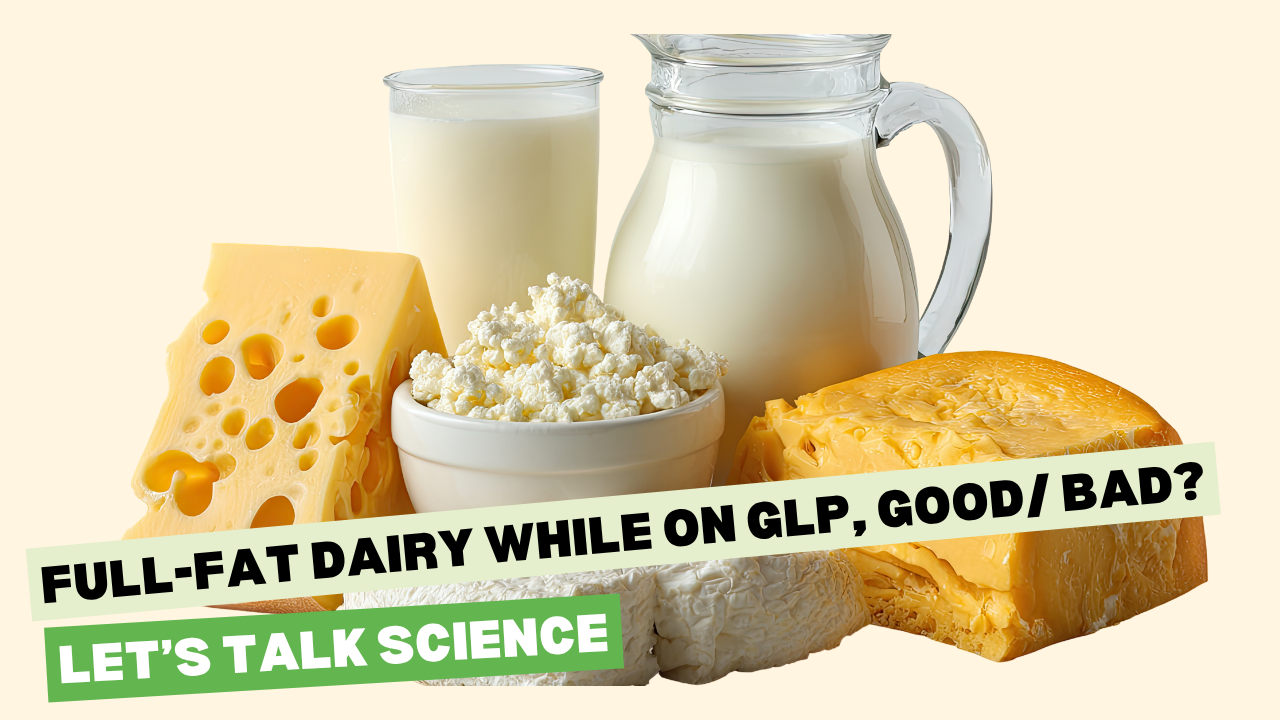
For years, dietary advice has encouraged reduced-fat dairy options to support heart health and weight management. More recently, headlines have shifted, suggesting that full-fat dairy may help with satiety, weight control, and even metabolic health.
One of the key mechanisms often discussed is GLP, a gut hormone now widely recognised due to its role in weight-loss medications. But does eating full-fat dairy truly mimic these effects? Let’s break this down.
What is full-fat dairy?
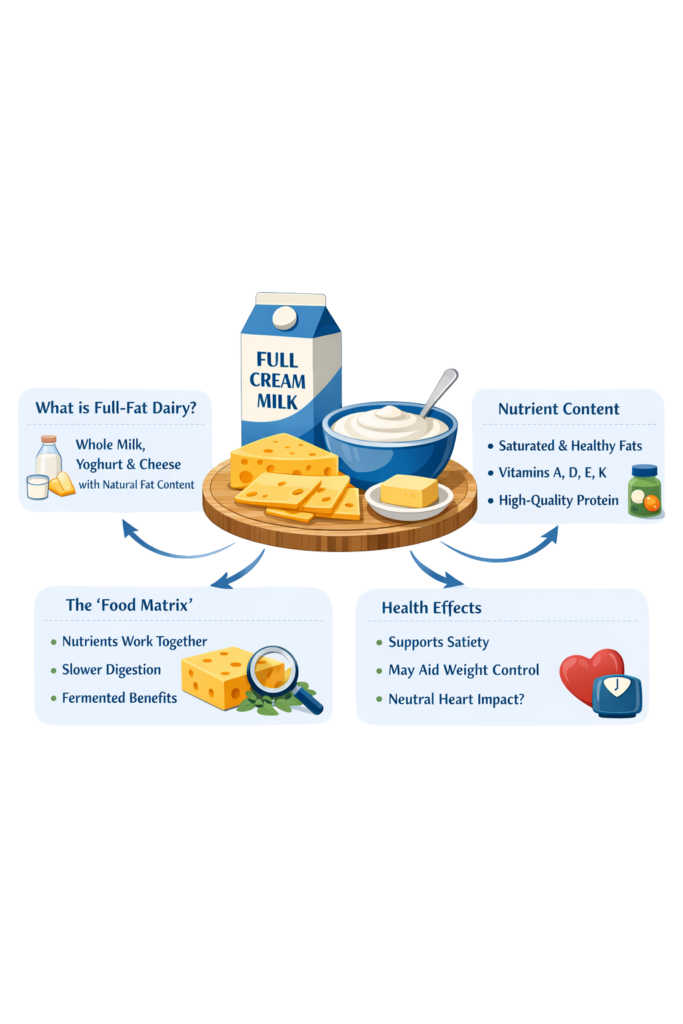
Full fat dairy refers to milk, yoghurt and cheese that retain their natural fat content.
In Australia, this typically includes:
What does “full fat” actually mean nutritionally?
The fat in dairy is mostly saturated fat, but it also contains:
Unlike processed fats, dairy fat exists within a whole food structure, alongside:
👉 This combination is important, because it influences how the body digests and uses these nutrients.
What is GLP and why does it matter?
You may have heard that full fat dairy stimulates GLP 1, the same hormone targeted by medications like Ozempic.
Here is what that actually means.
GLP 1 is a hormone your gut naturally releases after eating. It helps:
Foods that contain both fat and protein such as yoghurt and cheese tend to:
However, this effect is modest.
Food supports your hunger hormones, but it does not replicate the powerful effect of medications.
👉 Dietitian takeaway:
Full fat dairy can help with satiety, but it is not a weight loss shortcut.
How does full-fat dairy influence satiety?
Emerging research suggests that whole dairy foods particularly those containing both fat and protein may support satiety through natural physiological mechanisms.
1. Slower digestion
Dietary fat delays gastric emptying, meaning food stays in the stomach longer. This contributes to prolonged feelings of fullness after eating.
2. Hormonal response
Fat and protein together stimulate the release of satiety hormones, including GLP, peptide YY (PYY), and cholecystokinin (CCK). These hormones signal the brain to reduce hunger.
3. Improved meal satisfaction
Full-fat dairy often has a richer texture and flavour, which may enhance eating satisfaction and reduce the likelihood of compensatory snacking later.
Does this mean full-fat dairy aids weight loss?
This is where nuance is essential.
While full-fat dairy may support satiety, the effect is modest and physiological, not comparable to pharmacological interventions.
👉 GLP medications:
👉 Whole foods:
In practice, this means:
The food matrix effect: why cheese is not just fat
One of the biggest shifts in modern nutrition science comes from research including work from University College Dublin. This is known as the food matrix concept.
The food matrix refers to the structure of a food and how nutrients interact within it, not just the nutrients themselves.
Why this matters
For years, dairy was judged mainly on saturated fat content.
But foods like cheese and yoghurt behave very differently in the body compared to isolated fats.
1. Nutrient interactions
In cheese, calcium binds with fatty acids in the gut. This can reduce fat absorption and may influence cholesterol response.
2. Fermentation benefits
Fermented dairy such as yoghurt and cheese contains beneficial bacteria and bioactive compounds that may:
3. Slower digestion
The combination of protein, fat and minerals slows digestion. This helps:
👉 Key insight:
We do not eat nutrients in isolation. We eat foods, and their structure matters.
What does the evidence say about full-fat dairy and health?
Recent systematic reviews and cohort studies suggest:
However:
Full-fat vs low-fat: is one better?
The answer depends on the individual.
Full-fat dairy may be suitable for:
Reduced-fat dairy may be appropriate for:
👉 The key takeaway:
The quality of the overall diet matters more than the fat content of a single food.
What about butter?
Butter differs from yoghurt and cheese because it is:
For this reason, it is best used sparingly, rather than as a primary fat source.
Diet Yumm perspective: Mind to Plate™
At Diet Yumm, we move beyond “good vs bad” food narratives.
Through our Mind to Plate™ model, we focus on:
Whether you choose full-fat or reduced-fat dairy, the goal is the same:
✔ Balanced meals
✔ Adequate protein and fibre
✔ Long-term sustainability
Full-fat dairy is not a “miracle food”—but it is also not the dietary villain it was once considered to be.
It can:
However:
👉 It should be consumed in appropriate portions
👉 It should be considered within the context of the overall diet
Need personalised advice?
If you are unsure what type of dairy is right for you, our team at Diet Yumm can help.
🎙️ As featured on radio:
We recently discussed this topic live on a 4BC Brisbane Radio Station.
👉 Listen to the full interview here: https://open.spotify.com/episode/56F3rg3RrRfNkGEvCVhLBY?si=dthiffvNSGqdDtKYRxuUlg
References

Purva Gulyani – an Accredited Practising Dietitian and lifelong member of the Indian Dietitian Association. Currently pursuing PhD at Latrobe University. Purva brings over 16+ years of clinical dietitian experience to the table.


