

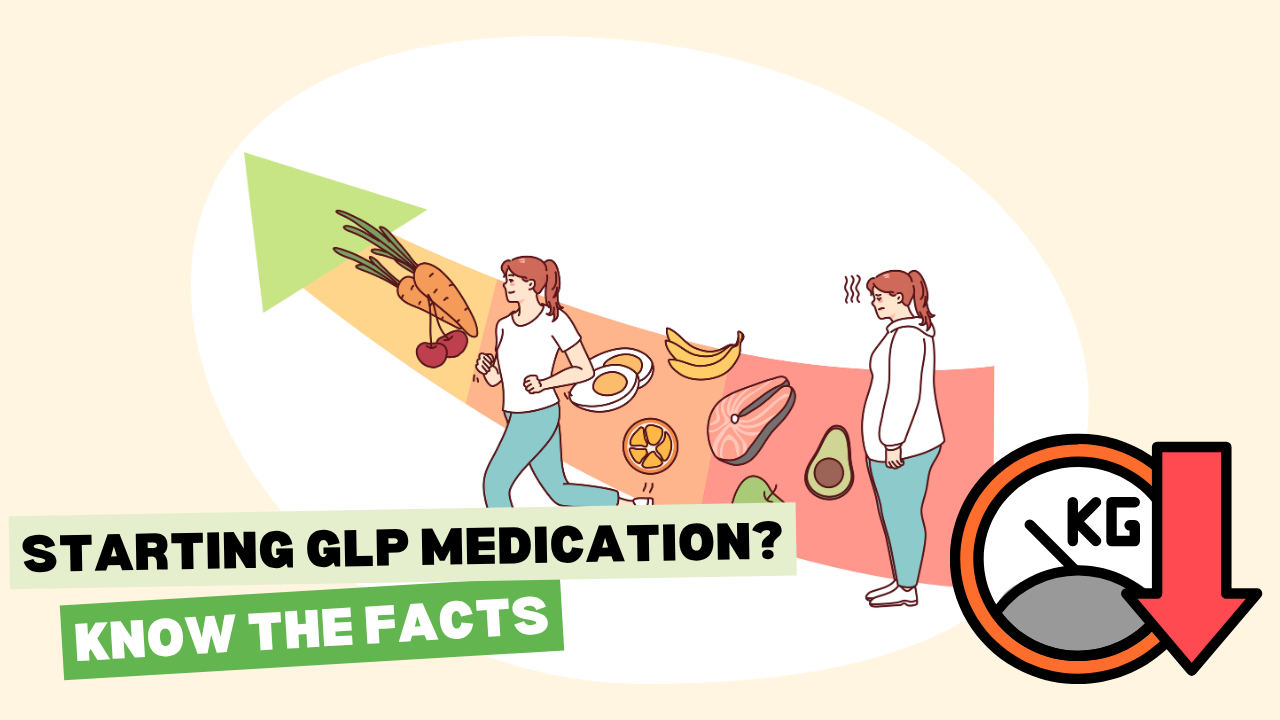
If you have been hearing about GLP medications lately, whether it is for weight loss, diabetes, or even fatty liver, you are not alone. These medications have genuinely changed the landscape of metabolic health.
But here is what you need to know! GLP is not a shortcut. It is a tool.
And like any tool, how you support your body alongside it, especially through nutrition, determines your long term results.
Let us break this down in a way that actually makes sense.
What is GLP, really?
GLP, or Glucagon Like Peptide 1, is a hormone your body naturally produces in the gut when you eat. Its role is to help your body process food efficiently.
When you eat, GLP:
All of these actions help regulate blood sugar, appetite, and energy balance (Drucker, 2018; Baggio and Drucker, 2007).
GLP medications mimic this hormone, but in a more sustained, pharmacological manner.
How GLP medications actually work beyond appetite suppression
Most people think GLP simply reduces hunger, but the mechanism is far more complex.
GLP receptor agonists act on the hypothalamus and reward pathways in the brain. This reduces hunger and can even alter food preferences and cravings (Secher et al., 2014; Müller et al., 2019). This is why many individuals report that their relationship with food feels different.
These medications slow gastric emptying, meaning food stays in the stomach for longer durations (Nauck et al., 2011).
GLP enhances glucose dependent insulin secretion and suppresses glucagon release (Baggio and Drucker, 2007). This allows better glycemic control with a lower risk of hypoglycemia compared to some other therapies.
GLP receptor agonists improve insulin sensitivity and contribute to weight loss through reduced caloric intake and metabolic adaptations (Drucker, 2018; Wilding et al., 2021).
Why nutrition still matters so much
This is where most people misunderstand the process. Because appetite is reduced, there is an assumption that eating less automatically means better outcomes.
But eating less is not the same as eating well.
When total intake drops, the risk of inadequate intake of protein, fibre, and micronutrients increases.
This can lead to:
Weight loss induced by GLP can include loss of lean body mass if protein intake is insufficient (Wilding et al., 2021). Loss of muscle can negatively impact metabolic rate and long-term weight maintenance
Since appetite is pharmacologically suppressed, individuals are no longer relying entirely on internal hunger cues. This makes intentional eating patterns more important than intuitive eating in the early phases of treatment.
Common side effects and why they occur
Most side effects are a direct extension of how GLP functions in the body.
Common side effects include:
These occur primarily due to delayed gastric emptying and changes in gastrointestinal motility (Nauck et al., 2011; Drucker, 2018). Symptoms are usually more pronounced during the initial weeks and tend to improve over time.
How nutrition helps manage these side effects
Nutrition plays a key role in improving tolerance and adherence to therapy.
Helpful strategies include:
These approaches reduce the burden on delayed gastric emptying.
Helpful strategies include:
Since gut motility is slowed, these measures support bowel regularity.
Helpful strategies include:
Undereating is common and can lead to low energy levels if not addressed.
Adequate protein intake is essential.
This helps ensure that weight loss is primarily from fat mass rather than lean tissue (Phillips and Van Loon, 2011).
While GLP alters appetite and food preferences, it does not build structured eating habits.
Sustainable outcomes still depend on:
A reality check
GLP receptor agonists are highly effective for improving glycemic control and promoting weight loss. They also show benefits in conditions such as non alcoholic fatty liver disease (Drucker, 2018; Armstrong et al., 2016).
However, they are designed to complement lifestyle interventions, not replace them.
The takeaway
GLP changes your physiology.
Nutrition determines how well your body adapts to that change.
If intake is too low, deficiencies may develop.
If food quality is poor, outcomes are limited.
If nutrition is intentional, results are optimised.
In one simple line
GLP helps you eat less. Nutrition ensures that what you eat still supports your body.
References

Purva Gulyani – an Accredited Practising Dietitian and lifelong member of the Indian Dietitian Association. Currently pursuing PhD at Latrobe University. Purva brings over 16+ years of clinical dietitian experience to the table.


Commence your transformative journey to wellbeing today, taking the initial stride towards a healthier, happier you. Embrace constructive alterations that lead to a brighter and more vibrant future.
